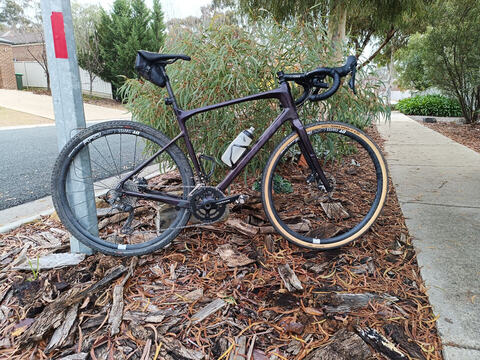
11speed GRX. Have swapped wheels, saddle, seatpost (zero setback) Narrower bars and longer -17° stem. The frame has more stack than I’d like.
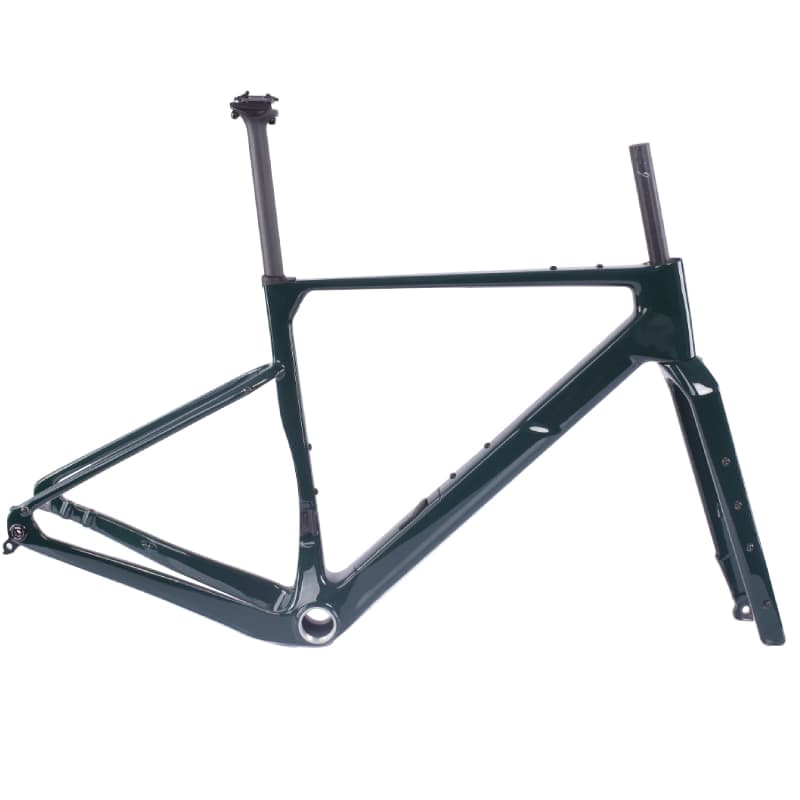
It will only fit ~47mm WAM tyre in the back. I’d like to go wider and 1x eventually. There are some good frames coming out of China at the right price. A section in Chinertown on gravel has them.
It looks like that position would put a lot of weight forward and on the front wheel. If things get suddenly slippery, rough, or soft, a bike with that geo might become a handful.
As you know below is my gravel bike. When I’m descending on that 36% gradient section with the dropper down and both tyres struggling with grip - since it’s hard to even walk up or down. I don’t feel that confident. I can’t say I’d want to try it on that bike.
Yeah fair enough. It is a mountain bike but yeah even with that 36% would be steep. Gravel roads and rail trails is what I ride with a gravel bike.
Pretty similar to what I ride on the road but on the dirt. No single track type stuff. I avoid wet stuff too. I’ll just get on the trainer if I must ride and it’s wet outside.
I want a very similar position to what I have on the road. High and wide bars are a no.
The fire trails I’m describing are still dual track, so technically gravel. But it’s common to have 30% gradient sections because their purpose is to circle around the housing, rather than take the easiest geographical path.
Consequently some short sections are roughly concreted, which is I can only assume because even the fire trucks were struggling when wet.
Like yours, mine was bought and modified for purpose. So I suppose it’s safe to say that gravel bikes aren’t build for steep fire trails unless the average rider wants to walk a lot of sections. On a good day I can ride it all. But most days I’m walking bits too.
Which brings me to the question of gravel bikes moving forward. Are gravel events eventually going to go the way XC MTB did of getting more challenging? Not likely an issue for you, but it appears a common trend in off-road events. That will probably influence future gravel bike design, if it isn’t already.
My current gravel bike has over 25k km of gravel on it and has a 130mm -17 stem on it to suit my fit. It is pictured in the first post of this thread. Yes it has done plenty of rocky fire trails. That is where the larger tyres would be preferred. Some steepish descents in that 25k km. Zero concerns with faceplanting over the front with that set up. I see road and gravel getting longer and lower as aero drag is still the biggest resistive force to forward momentum faced.
As a side note I don’t see 30% as common at all. I have 180k km on my Strava. A shed load of steep climbs in that, including the back of Falls creek several times. Nothing over 20% that I recall. Anything over 30% would be very difficult to form/maintain.
I’m not implying that 30% is common. But that’s what I measured with an inclinometer at various points. Since I was curious as to why my gravel experience was quite different to the perceived norm. That probably is my point as to why my bike for riding mainly gravel looks different to the norm. You’re confirming why the typical gravel bike looks more like a road bike with fatter tyres and lower gears if you’re not doing more than 20%.
It’s probably why I only see MTBs on the local fire trails. Most of the inexperienced ones are pushing their MTBs on the steep sections. I was told by a runner that he only sees e-MTBs climb that 36% grade section. Well I managed to get up there today. But that isn’t the norm. Walkers are often impressed when they see me riding up these steeper hills. They’re not expecting it.
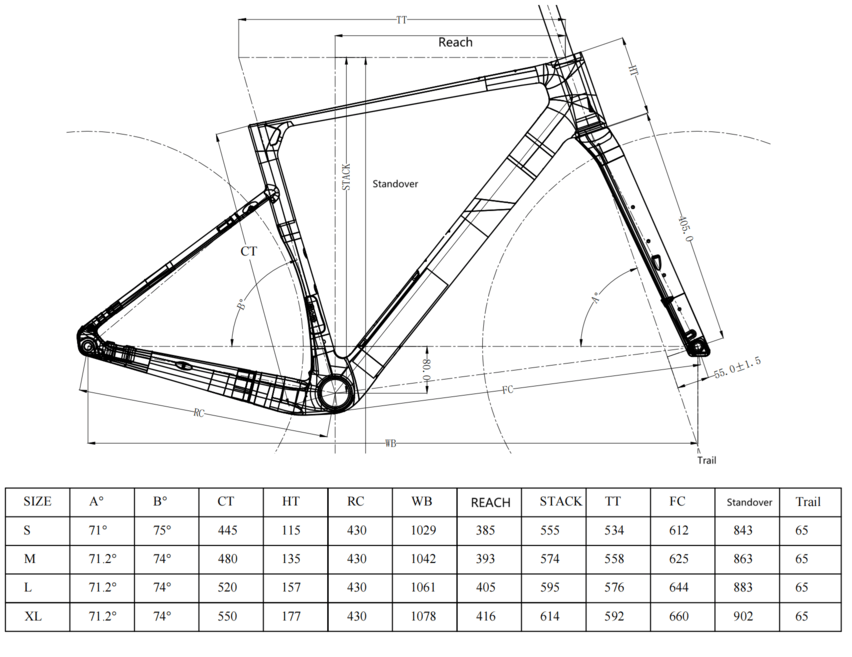
71 HTA and a 65mm trail sounds like a good compromise for gravel.
T47 BBs were expensive last time I looked. But they’re hopefully more common now. A better standard than press-fit. Press-fit was an answer to a question no one asked.
2x might be technically better, but there are too many advantages for 1x off-road IMO. All my current bikes are 1x and I can’t see myself ever going back.
Can’t see anyone ever needing more than 57 for gravel. But I could be proved wrong in the future as tyre tech changes.
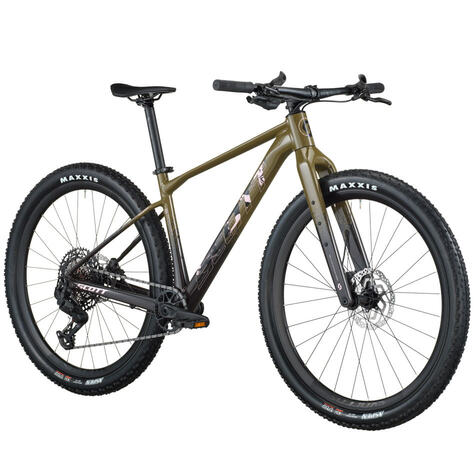
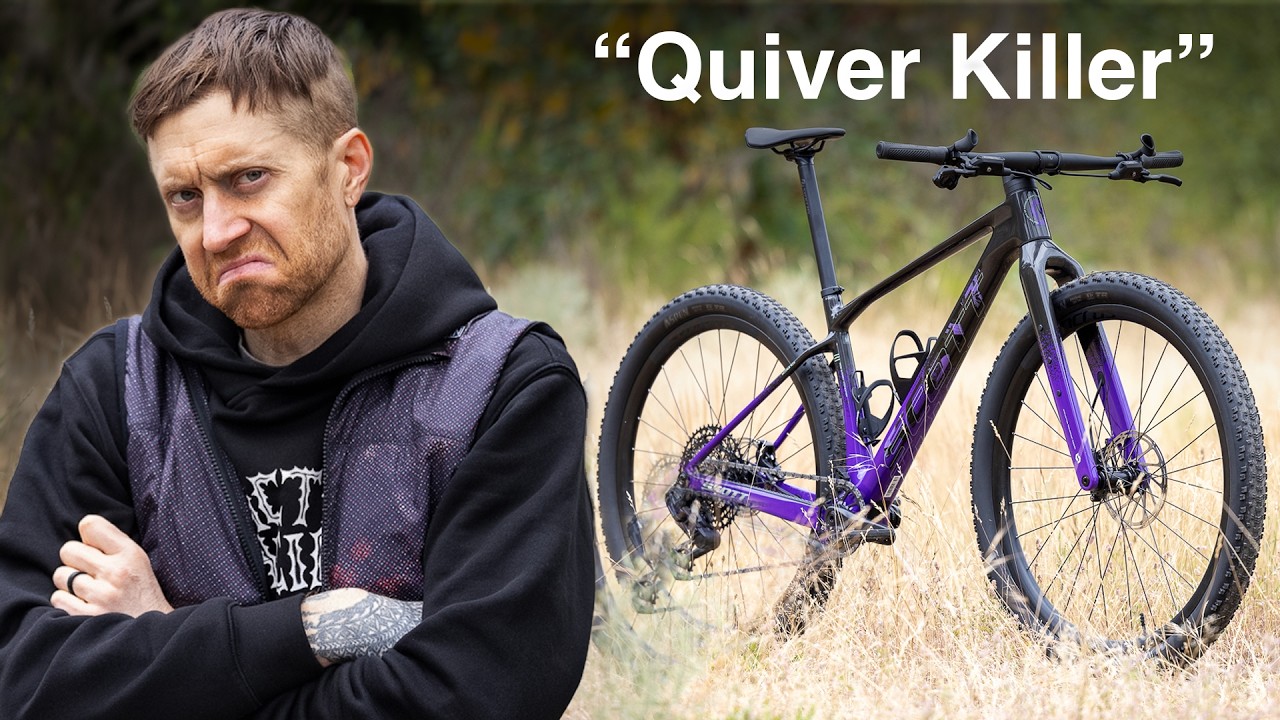
Here’s another more extreme gravel bike that I would have considered buying if it existed at the time I bought last year. A Scott Scale Gravel 20. It has some interesting “bar ends” on the inside of the grips called Spirgrips.
I suppose it matters what something looks like. But I came at this with the question of what is the best tool for the job of riding my local fire trails in poor condition.
I asked myself what would make the ride better. The answer was not having to get off and push. Or clip stack on climbs because of spinout with my usual standing climbing style. Something that could handle everything gravel, but wasn’t very slow like a fat bike. I wanted to try modern geo, 29" wheels, new standards. But it turns out, unless it’s very rocky singletrack, my old 26" bike climbs just a well, and is faster. It’s also rougher and less stable. But I also see those traits as a lively positive feature at times.
I think the main reason the 26" is faster is the thinner 2.25" (57mm) tyres - with their particular fast roll characteristics.
For whatever reason, hand position isn’t an issue for me. I don’t ride fast enough to care about aero. I’m super slow up the hills and on the brakes heavily going down because I’m a fragile 58 year old just out for some exercise away from the cars.
You should know better than me that if aero is important, then drop bars aren’t it. TT bikes don’t have drops. A level forearm is faster.
Also a flat bar is going to be better for control on gravel than a skinny drop bar.
As usual we disagree on much. But it all interests me just the same.
it isn’t that complicated, they are gravel bikes used on the type of gravel riding I was considering when I posted this thread. There are multiple riders here that I ride with on occasion. We had a gravel bunch going a while back. That type of terrain, those types of drop bar gravel road bikes.
As you say in your own introduction;
Mainly MTB these days, with some other road commuting at times. Mainly for exercise and a hobby. 58 y.o. so don’t bounce well anymore and ride accordingly…
Yes, my fault in that statement quoted. It appears I can’t be trusted. As by percentage of a standard ride is about 80+ percent fire trails now, which is gravel. If I make it to the MTB park, then it’s technically MTB, which I was probably doing at the time. There is another off-shoot which is singletrack which is where I took the recent photo. Some road to connect to and from the trail. But only 1 km, or maybe 2 km each way if I go around the other way. Some of that is on the verge to get off the road and conserve the tyres.
Then there is some straight road rides on the commuter bike to get to the shops and elsewhere. Short rides though.
I think I went on one race with the Perth MTB club when living there in about 1993. The pea gravel encouraged me to give up MTB and switch to road commuting as I thought it was too precarious. Soon after I did my first low grade crit race there. I hated it, so it was my first and last road race. So by about 1994 I was done with competition and especially MTB. I wouldn’t take up MTB again until about 2010. Even then it was just up the creek line locally.
I didn’t take up gravel until I moved to current location about 6 years ago.
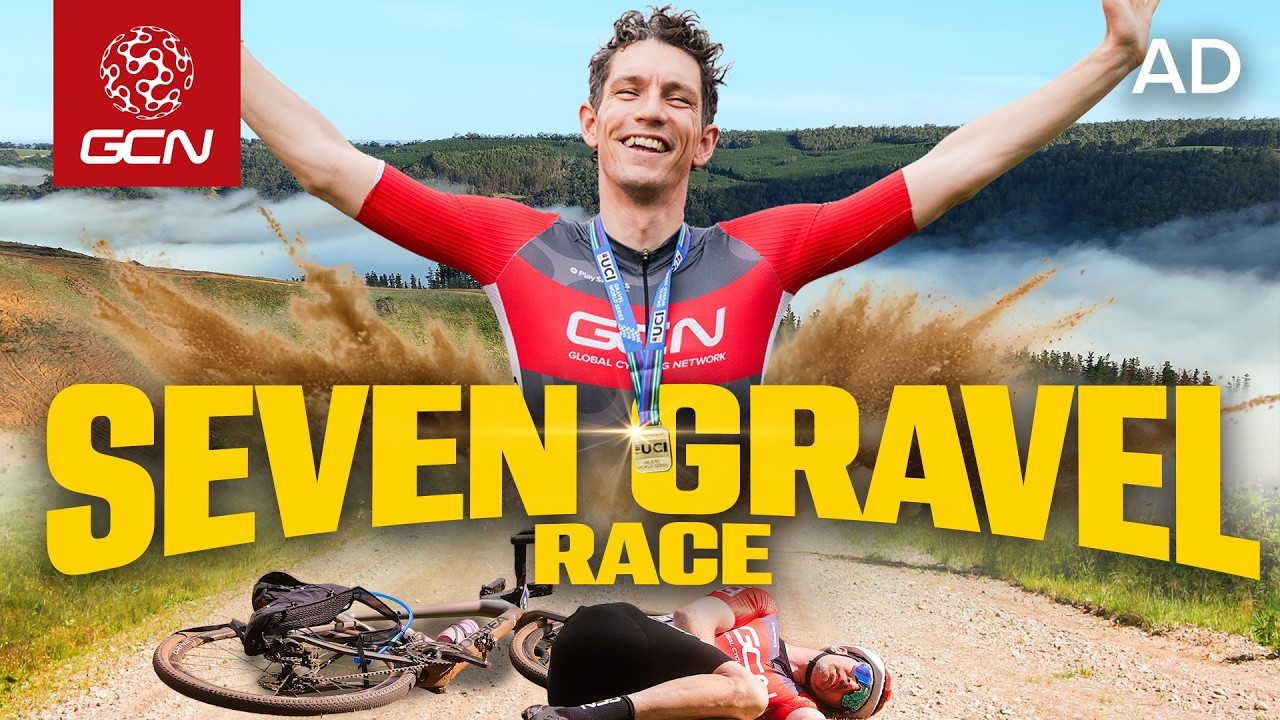
As for the video. They were only talking about 8% at max for their climbs. That isn’t 30%. I generally don’t watch GCN or derivatives these days as they proved with the wax videos that they didn’t really know what they were talking about, and suffered from sponsor bias. As shown by ZFC.
Fair enough with the sponsor bias. I agree with that. They can ride though. Pretty impressive power outputs from both of them. However that wasn’t the point of linking it. Multiple gravel bikes were shown at a gravel event. They were almost all drop bar road bikes that take larger tyres. I have done a couple of gravel races here and same. Not a single flat bar, rigid forked MTB as you have chosen.
The lack of 30% climbs is also the norm. I have over 25k km on my gravel bike now. I have never come across one. Certainly some shorter steeper stuff than was featured on that race., but never seen over 20% on my rides.
I guess you are riding gravel, just not the gravel I or anyone I personally know has. We are all riding gravel road here that are accessible by regular vehicles. A selection of new routes that are quiet with respect to motor vehicle traffic. It appears smoother and faster than what you are doing.
A few locals from here in the States at the moment racing gravel events over there now. There is a pretty big gravel circuit over there it seems. No they are not using MTBs on it.
Like it or not our riding choices are largely informed by racing and there is an established gravel racing scene. Home - UCI Gravel World Series No, flat bar bikes are not heavily featured.
Yeah, that says it all really. The marketing machine of racing and influencers.
Your choices are inspired by racing. My choices are inspired by the the terrain. Yet we are both riding on dual track gravel. I’m sure there are very capable riders that could climb everything I do on 45mm almost slick gravel tyres and taller gearing on a drop bar gravel bike. I’m just not one of them. I can get up there sometimes, but never seated. I’ve got 18" gearing and my rear tyres are between considered aggressive XC to light trail. I’m running about 16 psi in the 2.25" and 14psi in the 2.4".
In my local area I’ve only ever seen one drop bar gravel bike and that was on one of the flatter sections.
This video might help. This is where I heard of the Scott Scale Gravel bike. My bike is very similar, but Kona calls it a bike packing MTB. It’s all just marketing in the end. They will call it whatever they think will get the best sales at the time. I wouldn’t be surprised if Kona changes the name in the future or brings out something similar, more gravel specific.
“Run what you brung.” If it doesn’t work, modify it until it does.
What is available for the terrain I am riding, which is general gravel roads, is largely informed by racing. Guess what? They are racing over the same terrain I am riding. What is informed by racing, as it turns out, works pretty well for that terrain as a result. I make adjustments in stem height and length, bar width, saddle height and placement, crank length, cleat placement and I have a very effective bike that is comfortable and as efficient as anything that is readily available over the terrain I am riding
There simply are no 30% climbs here and I have no interest in searching them out even if there were. As you remark, people are surprised when they see you riding up them. That is because it is not conventional bike riding territory. You may enjoy the challenge and if that is what gets you out there then good stuff. It does not follow however, that it is in anyway, convenventional, widespread, gravel terrain. Which is presumably why you have sought out an unconventional bike that is suited to those uncommon gradients.
50psi in the tyre?!
Who and where was that mentioned with respect to gravel. My current bike has a 45r and 40f on it ~ 30psi each end is plenty. I will chuck a 45 or 50 on the front when it wears out if I haven’t got a frame that allows larger tyres than that by then. I am about 20kg heavier than you btw at 80kg.
I watched that video. It looks like a hardtail mtb with a rigid fork and it essentially is. It is their hardtail frame apparently.
Similarly the terrain he was riding in the video looks MTB terrain to me. I cannot see why their hardtail bike with a lockout fork wouldn’t be more versatile. Price I guess must be the determining factor.
We ride very different stuff it seems. I use the drops alot on my bikes. Your fit is wrong for your flexibility if you cannot imo. The gearing with that small chainring would be a limiting factor for where I ride also. 32/10 is a very small top gear.
I have ordered the Ltwoo eGR groupo for the Revolt a 172.5 mm 1x with a 44t chainring and a 12s deore 10-45 cassette. Will post on here how it goes.
Anyway enjoy your riding mate, and I hope it remains safe and fun.

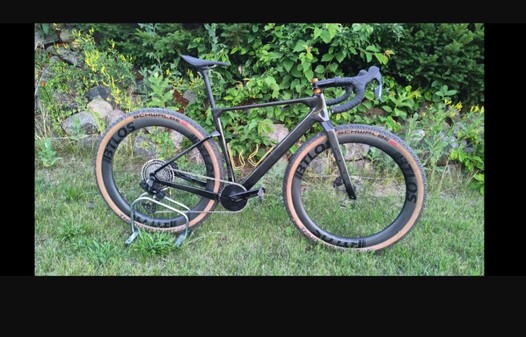

 But that isn’t the norm. Walkers are often impressed when they see me riding up these steeper hills. They’re not expecting it.